


Invasion of Taiwan
|
Since Meiji Restoration, the Empire of Japan had actively expanded its imperial power. In 1874, Japan sent troops to Taiwan on the grounds of the beheaded incident of Ryukyun crews. Japan classified the islands of Taiwan into Shina and Huan lands, and excuded the power of sovereignty over Huan lands from Qing dynasty, which is the first step of the Japanese invasion. Due to Joseon problems, Qing dynasty and Japan broke out a war again in 1894. With Weihaiwei fell and Beiyang Fleet surrender, on March 1895, while Qing dynasty and the Japanese were still negotiating the peace treaty at Shimonoseki, the Japanese had sent the armed forces to occupy Penghu. 4 days later, Penghu was taken by Japanese. 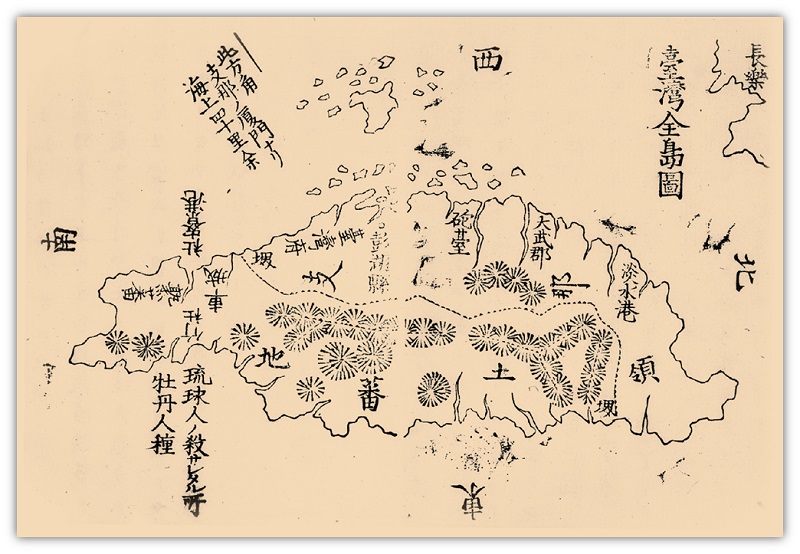 Figure of the Islands of Formosa from the《臺灣戰事紀聞》
(Source:日本宮內廳書陵部所藏臺灣寫真,,Digital archives of the Archives of Institute of Taiwan History) The book records the course of how Japan sent troops, launched an expedition, and occupied local Huan settlements after the Mudan incident. The Islands of Formosa in the book divided the islands into two major regions: Shina territory and Huan lands.
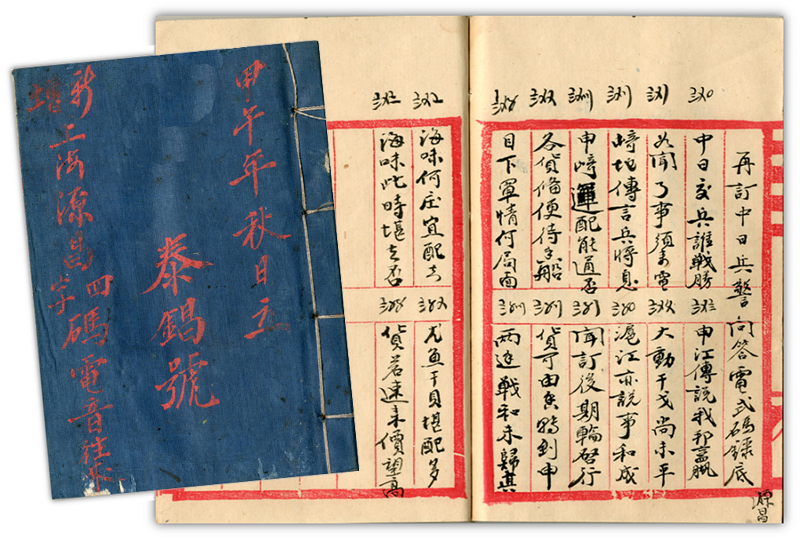 Telegram Copy Book by Taichang firm in 1894
(Source:〈泰益號文書〉,Digital archives of the Archives of Institute of Taiwan History) The “Duplicate Code Recordings between Chinese and Japanese Police and Military Forces” is a telegram sent from Yuanchang firm in Shanghai to Taichang firm in 1895. It shows the war situations between China and Japan, which concerned the firms who dealt with business between the two places.
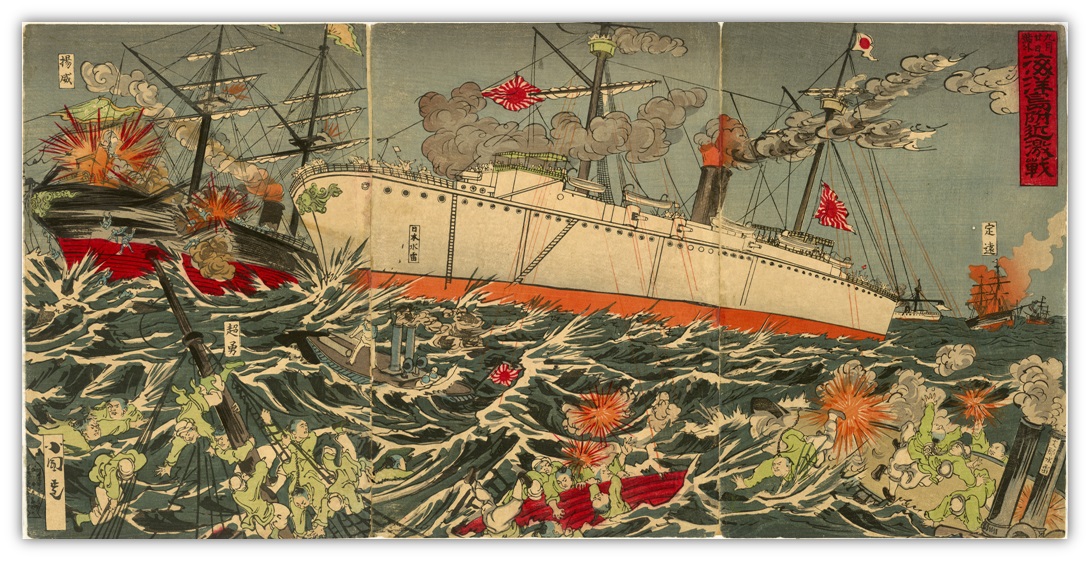 Figure of a Violent Battle near Surrounding Islands
Source:戰役浮世繪,Digital Archives of the Archives of Institute of Taiwan History On January 1895, the Japanese landed Rong-Cheng bay on Shandong Peninsula and attacked immediately a rear area of Weihai. In February, Japanese armadas who blockaded the harbors, sent torpedo boats sneaked into naval port and used torpedoes attacked some fleets such as “Chinese ironclad Dingyuan”. The crew at sea in danger of being killed at any time by explosions, burns or drowning. All of Qing sailors and Japanese sailors were desperate in order to defeated the other side.
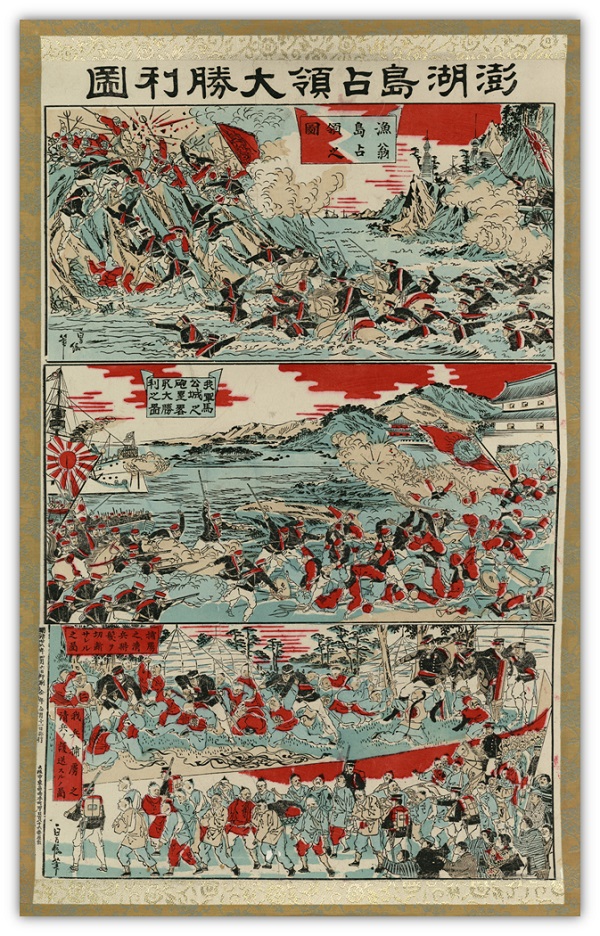 Figure of the Great Victory of Occupation of the Penghu Islands in 1895
(Source:Provide by Prof. Yang, Rur-bin) The three-cell figure interprets that when the Japanese invaded Penghu, they first occupied the Fisherman Island, then won the victory by the cannons on battery at the Magong city, and forced the captive Chinese soldiers to cut their braided hair.
|