

|
Ye Sheng-ji’s 1939 diary carefully recorded his school’s excursion to Japan. Let us follow his steps to the impressive spots with our abundant archives! The itinerary shows that they visited the historic city of Kyoto, industrial metropolis of Osaka, and Kamakura and Nikko, which remain ancient Japanese civilization. Outlining his travel around main attractions in Japan via trains, buses, ferries, his diaries build up modern and time-honored images of the metropolitan state (see Table 1).
Table 1:Itinerary of school excursion to Japan, July 11th - 26th, 1939.
Source: Summarize form The Diary of Ye Sheng-ji, 1939 On July 13th, 1939, Ye Sheng-ji visited Unzen-Amakusa National Park and saw the famous “Unzen Mud Volcano”, which was two meters in diameter. Ye Sheng-ji thought that, compared to the "Tianliao Moon World" in Kaohsiung, the Unzen Mud Volcano was adequate. He was the first student to climb to the top of Mount Unzen. The sublime scenery made him satisfied, and he said he would never forget the feeling of drinking a cool soda after a tiring walk down the mountain (see Figure 8).  Figure 8-1: Image of The Diary of Ye Sheng-ji from July 13th, 1939.
Source: Ye Sheng-ji Papers, Taiwan Archival Information System  Figure 8-2: Image of Unzen-Amakusa National Park in the 1930s.
Source: The national parks of Japan, Taiwan Rare Book Collections On July 16, Ye Sheng-ji took a bus to visit Beppu Jigoku, a place with several natural hot springs with strong steam rising just like “hell”. He first saw Chinoike Jigoku, which had red mud at the bottom of the water. He then visited Oniishibozu Jigoku, where mud and hot springs erupted from a clay hole that seemed like a monk’s head. He also visited Umi Jigoku, Shiraike Jigoku, and Tsurumi Jigoku, thinking “hell” was a very hot place. Although “hell” seemed scary, it was a good place for patients who suffered from skin or enterogastric problems(see Figure 9). 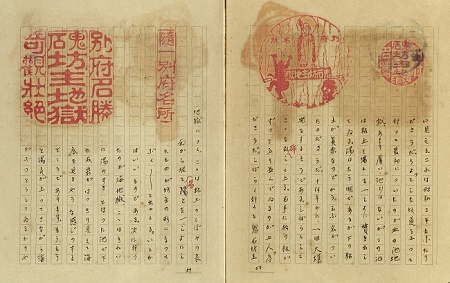 Figure 9-1: Image of The Diary of Ye Sheng-ji from July 16th, 1939.
Source:Ye Sheng-ji Papers, Taiwan Archival Information System
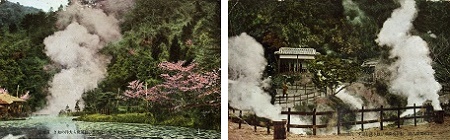 Figure 9-2 & 9-3: Images of Umi Jigoku and Hachiman Jigoku.
Source: Michael H.Finegan Collection, Taiwan Archival Information System
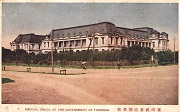
On July 26th, Ye Sheng-ji visited the National Diet Building, the core for policy establishing. This magnificent architecture was constructed by a huge amount of building stone and steel bars. If all the stones were piled on the ground, the height would be equal to 30 Mount Fujis. The length of all steel bars was equal to the distance from Tokyo to Honolulu. Furthermore, it took eight hours to walk around all the rooms of the National Diet Building. Ye Sheng-ji also visited the House of Representatives and witnessed the process of examining a budget(see Figure 10). 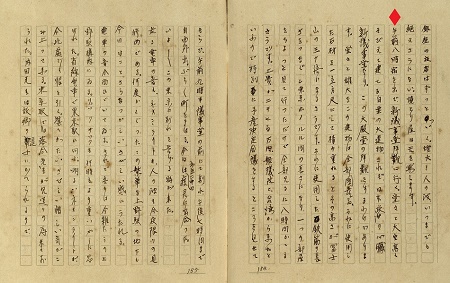 Figure 10-1: Image of The Diary of Ye Sheng-ji from July, 26th, 1939.
Source: Ye Sheng-ji Papers, Taiwan Archival Information System  Figure 10-2: Image of the National Diet Building.
Source: Michael H.Finegan Collection, Taiwan Archival Information System |
  |